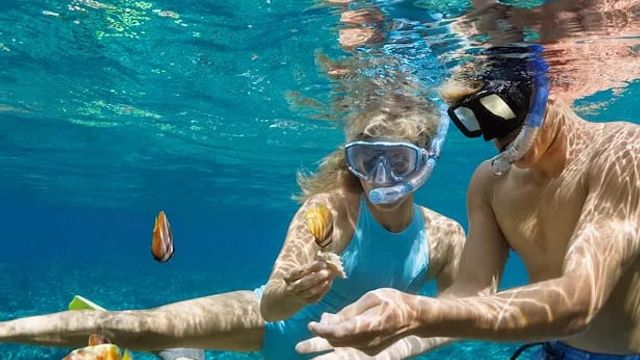
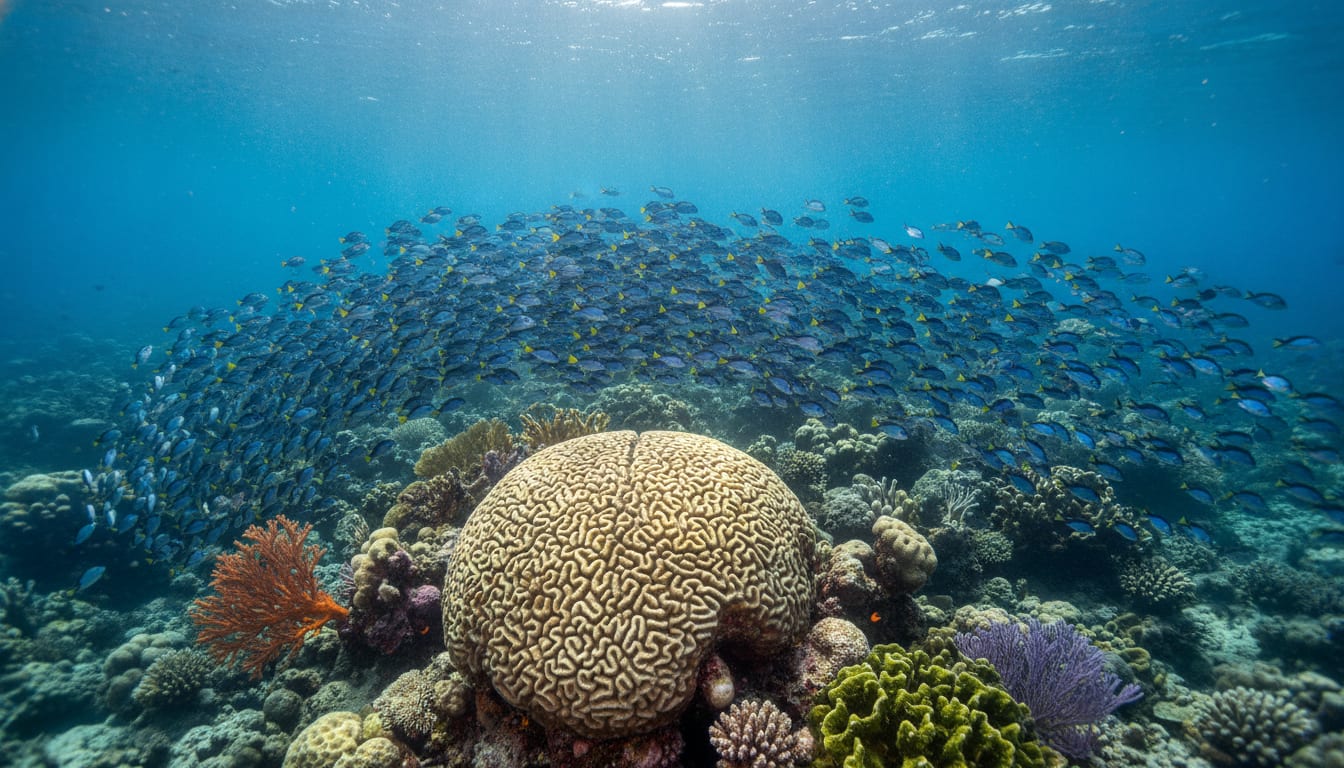
The Belize Barrier Reef, the largest reef system in the Northern Hemisphere and a UNESCO World Heritage Site, shelters more than 1,400 documented species, from neon-bright parrotfish to the elusive West Indian manatee. For travelers planning their first snorkel experience or a deep dive, knowing what you're looking at transforms a beautiful swim into a genuinely memorable encounter.
This glossary, compiled by the marine guides at Itz'ana, organizes the most commonly sighted (and most charismatic) Belize reef animals into clear categories, fish, invertebrates, corals, sea turtles, marine mammals, and elasmobranchs, with notes on where and when you're most likely to see each one.
How to Use This Glossary
Each entry includes the common name, scientific name, a short identification description, and the typical reef zones where the species appears. Where relevant, we've noted conservation status using the IUCN Red List and behavioral details drawn from research published by the Smithsonian Institution and the Belize Fisheries Department.
If you're still deciding how to experience the reef, our companion guides — [Snorkeling vs Diving the Belize Barrier Reef: Which Is Right for You?](Snorkeling vs Diving the Belize Barrier Reef) and the [Belize Reef Snorkel & Dive Site Directory](Belize Reef Snorkel & Dive Site Directory) — pair naturally with this glossary.
Reef Fish
Queen Angelfish (Holacanthus ciliaris)
Electric blue and yellow with a "crown" marking on its forehead, the queen angelfish is one of the Caribbean's most photographed reef fish. Solitary or in pairs, it grazes on sponges along coral walls between 5 and 25 meters.
Stoplight Parrotfish (Sparisoma viride)
A keystone reef grazer that scrapes algae from coral with a beak-like mouth — and produces much of Belize's white sand as a byproduct. Adults flash green, pink, and yellow; juveniles are mottled brown and white.
Blue Tang (Acanthurus coeruleus)
Often seen in roving schools, blue tangs move across reef flats in such numbers that they overwhelm territorial damselfish. Juveniles are bright yellow; adults are deep blue.
French Grunt (Haemulon flavolineatum)
Yellow-striped and gregarious, French grunts congregate in dense schools beneath coral overhangs by day and disperse to feed on the sandy bottom at night.
Nassau Grouper (Epinephelus striatus)
A culturally and ecologically iconic Belize reef animal, the Nassau grouper is Endangered (IUCN) due to overfishing of its spawning aggregations. Belize has established several protected spawning sites; sightings are most common at Caye Caulker and [Glover's Reef](Glover's Reef).
Great Barracuda (Sphyraena barracuda)
Long, silver, and unnervingly still in the water column, barracudas are curious rather than aggressive and frequently shadow snorkelers. Up to 1.8 meters.
Spotted Drum (Equetus punctatus)
A shy, striking fish with elongated dorsal fins and bold black-and-white stripes. Look under ledges and in small caves at 3–20 meters.
Trumpetfish (Aulostomus maculatus)
Long and pencil-thin, trumpetfish hover vertically among gorgonians and sea fans, ambushing prey. Colors range from brown to bright yellow.
Sharks & Rays (Elasmobranchs)
Nurse Shark (Ginglymostoma cirratum)
Docile, bottom-dwelling, and the headline act at Shark Ray Alley within Hol Chan Marine Reserve. Nurse sharks rest in groups under ledges by day and feed on crustaceans at night.
Caribbean Reef Shark (Carcharhinus perezi)
The most commonly encountered larger shark in Belize, typically seen on deeper dives at Turneffe and Lighthouse Reef atolls. Listed as Endangered by the IUCN.
Whale Shark (Rhincodon typus)
The world's largest fish visits Gladden Spit, just offshore from the Placencia peninsula, between March and June around the full moon — when snappers spawn and create a feast of eggs. We at Itz'ana arrange whale shark expeditions during this brief window from our doorstep.
Southern Stingray (Hypanus americanus)
Common on sandy flats and famous at Shark Ray Alley, where decades of feeding have habituated them to swimmers.
Spotted Eagle Ray (Aetobatus narinari)
Graceful, leopard-spotted, and often seen "flying" in formation along reef drop-offs. Wingspans reach 3 meters.
Sea Turtles
| Species | Scientific Name | IUCN Status | Where to See |
|---|---|---|---|
| Green Sea Turtle | Chelonia mydas | Endangered | Seagrass beds near Placencia, Hol Chan |
| Hawksbill Turtle | Eretmochelys imbricata | Critically Endangered | Reef walls, sponge-rich areas |
| Loggerhead Turtle | Caretta caretta | Vulnerable | Deeper reef margins, less common |
All three species nest on Belizean cayes between May and November. The Sea Turtle Conservancy provides updated nesting data for the region.
Marine Mammals
West Indian Manatee (Trichechus manatus)
Belize hosts one of the largest remaining populations of Antillean manatees in the world. Listed as Vulnerable, they are most often seen in shallow coastal lagoons and river mouths rather than on the outer reef. Swim Lazarus Caye and the Placencia Lagoon for the best chances.
Bottlenose Dolphin (Tursiops truncatus)
Resident pods patrol the reef and inner channels, frequently bow-riding alongside boats en route to dive sites.
Invertebrates
Caribbean Spiny Lobster (Panulirus argus)
A keystone of Belizean fisheries and cuisine, often spotted with antennae protruding from reef crevices. Season runs July through February.
Queen Conch (Aliger gigas)
The pink-lipped shell is iconic; the animal inside is a vital component of seagrass ecosystems. Managed under strict Belizean catch limits.
Caribbean Reef Octopus (Octopus briareus)
Nocturnal and brilliantly camouflaged. Night dives at Turneffe Atoll offer the best odds.
Christmas Tree Worm (Spirobranchus giganteus)
Tiny, colorful spiral-shaped filter feeders that retract instantly when shadowed. Found embedded in brain and boulder corals.
Flamingo Tongue Snail (Cyphoma gibbosum)
A small sea snail with bright orange-and-black leopard-spotted mantle, grazing on sea fans.
Corals & Sessile Life
Elkhorn Coral (Acropora palmata)
Once the dominant shallow-reef builder in the Caribbean, now Critically Endangered. Belize is home to several active restoration nurseries, including those operated by Fragments of Hope.
Staghorn Coral (Acropora cervicornis)
Branching, fast-growing, and equally critical to reef structure. Also Critically Endangered and a focus of replanting efforts.
Brain Coral (Diploria and Pseudodiploria spp.)
Massive, slow-growing boulder corals with the labyrinthine grooves that give them their name. Some colonies on the Belize reef are estimated to be over 500 years old.
Sea Fans (Gorgonia spp.)
Purple, lattice-like soft corals that sway in the current along the reef crest.
Giant Barrel Sponge (Xestospongia muta)
Sometimes called the "redwood of the reef," individuals can live more than 2,000 years according to research summarized by NOAA.
When to See What: A Seasonal Snapshot
| Season | Star Sightings | Conditions |
|---|---|---|
| December–February | Eagle rays, reef sharks, manatees | Cooler water (~26°C), clear visibility |
| March–June | Whale sharks at Gladden Spit, spawning aggregations | Calm seas, peak visibility |
| July–September | Hawksbill nesting, lobster, octopus | Warm water (~29°C), occasional rain |
| October–November | Migratory pelagics, healthy coral spawning | Variable; shoulder-season clarity |
Responsible Reef Etiquette
The Belize Barrier Reef is resilient but not invincible. The Belize Audubon Society and WWF ask all visitors to:
- Use only reef-safe (non-oxybenzone) sunscreen
- Maintain at least 2 meters of distance from all marine life
- Never touch or stand on coral
- Decline any tour operator who feeds or handles wildlife outside of regulated sites
Planning Your Reef Encounter
Our concierge team curates private and small-group reef excursions for guests staying in our hotel suites and villas — from half-day snorkel trips to multi-tank dives.